Zoho CRM CASL Compliance: Consent, Privacy and Canadian Data
Key takeaways
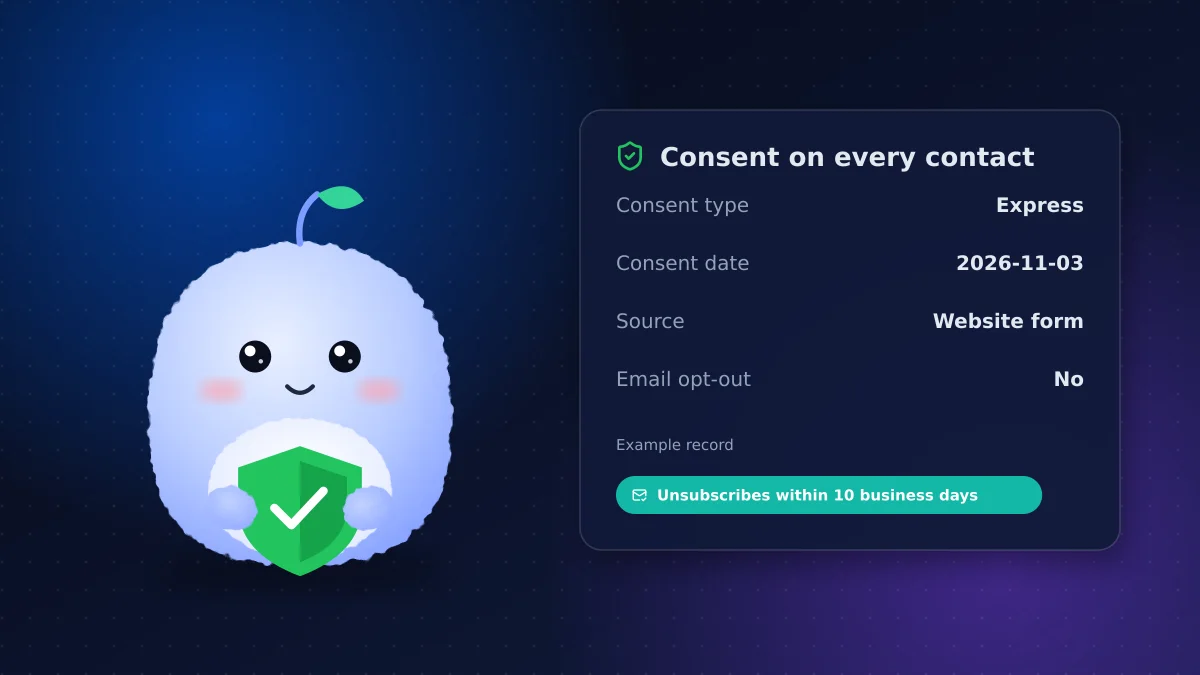
- CASL requires consent for commercial emails, and your CRM should record what kind of consent each contact gave and when.
- Implied consent expires; track the date it started so you know when to stop or ask for express consent.
- Unsubscribes must be honoured within 10 business days, and the mechanism must work for at least 60 days after sending.
- PIPEDA expects you to collect only what you need, protect it and explain how you use it.
- Zoho has data centres in Canada, which helps when clients ask where their data is stored.
A CRM makes it easy to email hundreds of contacts at once, which is exactly why Canada's anti-spam law matters. Zoho CRM has the fields and automations to manage consent properly, but it's built for a global market, so CASL isn't handled for you by default.
This guide explains how to set up Zoho CRM for CASL compliance and good privacy practice under PIPEDA. It's practical guidance, not legal advice; check specifics with a lawyer if your situation is complex.
CASL basics for CRM users
Canada's Anti-Spam Legislation (CASL) applies to commercial electronic messages, such as marketing emails and texts, sent to or from Canada. Every message needs three things:
- Consent to send it
- Identification of who's sending it, with contact details
- An unsubscribe mechanism that's easy to use
The CRTC's guidance on CASL explains the requirements in detail. Our broader guide to CASL compliance for small business covers website forms and texts.
Implied consent vs express consent
Express consent is when someone actively agrees to receive your messages, for example by ticking an unchecked box on your website form. It lasts until they withdraw it.
Implied consent comes from certain relationships. Two common examples:
- A customer who bought from you, for two years after the purchase
- Someone who made an enquiry, for six months after the enquiry
Because implied consent expires, your CRM needs to know when it started.
How to track consent in Zoho CRM
Set up a few fields on your Leads and Contacts modules:
| Field | Type | Example values |
|---|---|---|
| Consent type | Pick list | Express, Implied - purchase, Implied - enquiry, None |
| Consent date | Date | When consent was given or the relationship started |
| Consent source | Pick list or text | Website form, in person, purchase, event |
| Consent expiry | Date (calculated) | For implied consent, the date it lapses |
| Email opt-out | Checkbox | Zoho's built-in field for unsubscribes |
Then use automation to keep it current:
- When a website form submission includes a ticked consent box, set the type to Express and record the date
- When a deal is won, set implied consent from purchase with a two-year expiry
- A scheduled rule flags contacts whose implied consent is about to expire, so you can ask for express consent first
Honouring every unsubscribe
CASL requires unsubscribe requests to be processed within 10 business days, and the unsubscribe mechanism must keep working for at least 60 days after the message is sent. In Zoho CRM:
- Make sure every marketing email includes an unsubscribe link
- Use the email opt-out field so opted-out contacts are excluded from mass emails
- If you send email from another tool, sync unsubscribes back to Zoho CRM so the two never disagree
- Treat a "please stop emailing me" reply as an unsubscribe, even if they didn't click the link
PIPEDA: privacy beyond email
PIPEDA, Canada's federal private-sector privacy law, applies to the personal information in your CRM, not just your emails. Alberta and British Columbia have their own similar laws for businesses in those provinces. In practice, that means:
- Collect only what you need. Don't add fields "just in case."
- Limit access. Use Zoho CRM roles and profiles so people only see what their job requires.
- Protect it. Turn on multi-factor authentication and remove users who leave.
- Be open. Your privacy policy should explain that you use a CRM and what you store in it.
- Plan for breaches. Under PIPEDA, breaches that create a real risk of significant harm must be reported and recorded.
Canadian data centre
Some clients, especially in healthcare, legal and government-adjacent work, ask where their data is stored. Zoho opened data centres in Toronto and Montreal in 2023, according to its Business Wire announcement. Using a Canadian data centre doesn't replace your privacy obligations, but it's a clear answer to a common question. Decide this when the account is created, because moving later is harder.
Website forms and consent
Most consent starts on your website. When you connect forms to Zoho CRM:
- Add a separate consent checkbox for marketing emails, unticked by default
- Explain in plain words what people are signing up for and that they can unsubscribe at any time
- Send the checkbox value and the submission date into the consent fields on the lead
- Keep the form's wording on record, so you can show what people agreed to
- Don't treat a quote or contact request as permission to send newsletters; that's implied consent at most, and it expires
Getting this right at the form means your CRM data is reliable from the first record.
A quick Zoho CRM compliance checklist
- Consent type, date and source fields on Leads and Contacts
- Consent checkbox on website forms, unticked by default
- Automation for implied consent expiry
- Unsubscribe link in every marketing email and opt-outs synced across tools
- Roles and profiles limiting who sees what
- Multi-factor authentication for every user
- Privacy policy updated to mention your CRM
B2B email is covered too
CASL doesn't only apply to consumers. Commercial emails to businesses also need consent, identification and an unsubscribe mechanism. Implied consent can come from an address the business has conspicuously published, as long as there's no notice refusing marketing messages and your message relates to their role. Record that basis in your consent fields as well.
Conclusion: build compliance into the setup
Zoho CRM CASL compliance isn't a setting you switch on; it's a setup you design. Track consent with dates, honour unsubscribes quickly, collect less personal information and decide early where your data lives.
Want Zoho CRM set up with Canadian consent rules built in? See our Zoho CRM service or get in touch.
Frequently asked questions
Is Zoho CRM CASL compliant?
Zoho CRM gives you the tools to comply, such as custom fields, opt-out handling and automation, but CASL compliance depends on how you set it up and use it.
How long does implied consent last under CASL?
Commonly two years after a purchase and six months after an enquiry. Track the start date in your CRM so you know when it lapses.
How fast must I process an unsubscribe?
Within 10 business days. The unsubscribe mechanism in each message must also keep working for at least 60 days after it's sent.
Can Zoho CRM store data in Canada?
Zoho opened data centres in Toronto and Montreal in 2023. Choose the Canadian data centre when you create your account.
Do I need consent to email my existing customers?
Often you have implied consent from a recent purchase, but it expires. Track the purchase date and ask for express consent before it lapses.
Vaibhav Malhotra
Founder, VMR Technologies
Vaibhav Malhotra is the founder of VMR Technologies, where he leads the team building custom websites, e-commerce platforms, and AI solutions for businesses across the Greater Toronto Area and beyond. He writes about practical software and AI strategy for non-technical decision-makers — focused on what actually drives results rather than hype.