Law Firm Websites in Ontario: LSO Marketing Rules and Smarter Lead Intake
Key takeaways
- LSO Rule 4.2-1 requires marketing to be demonstrably true, accurate and verifiable, and not misleading.
- Avoid superlatives like "best" or "#1" and awards that aren't bona fide; only certified specialists may call themselves specialists.
- A good client intake form collects just enough for a conflict check before asking about the facts of the matter.
- A law firm chatbot can book consultations and answer process questions, but must never give legal advice.
For most firms, the website is now where a potential client decides whether to call. That raises the stakes on two fronts: the site has to persuade, and everything on it is marketing that the Law Society of Ontario regulates. Here is how to get both right.
What makes a law firm website convert
People looking for a lawyer are often stressed and short on time. The sites that win consultations make the next step obvious:
- Clear practice-area pages that explain who you help and how the process works
- Lawyer profiles with real credentials, year of call to the bar and a human tone
- Plain-language answers about fees, timelines and what to bring to a first meeting
- A visible way to book, by phone, online scheduling or a short form
- Fast, mobile-first pages, because many first visits happen on a phone
LSO marketing rules your website must follow
The core test is Rule 4.2-1 of the Rules of Professional Conduct: marketing must be demonstrably true, accurate and verifiable; must not be misleading, confusing or deceptive; and must be in the best interests of the public and consistent with a high standard of professionalism. Applied to a website, the LSO marketing rules mean:
- No unverifiable superlatives. The commentary flags terms such as "best", "super" and "#1".
- Awards and rankings only if bona fide. Pay-to-play badges are a risk.
- Careful use of results. Past outcomes can imply guarantees; give context and avoid suggesting future results.
- Accurate titles. Under Rule 4.3-1, only lawyers certified by the LSO may advertise as a "specialist". Saying you practise in or focus on an area is fine when it's accurate.
Have a lawyer at the firm review every page against these rules before launch, and again whenever content changes.
Designing the client intake form
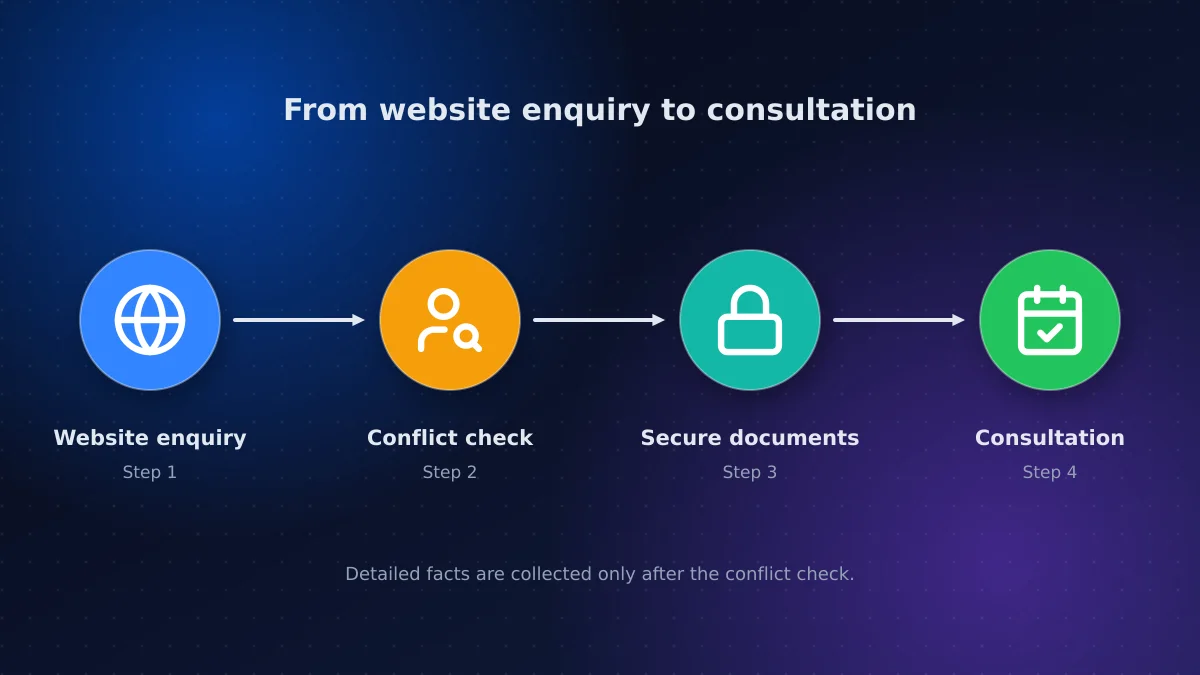
A client intake form has a tension built in: you want enough information to qualify the lead, but taking detailed facts before a conflict check can create problems. A two-step approach works well:
- First contact: name, contact details, practice area, the other party's name, and a one-line description
- After the conflict check: a secure follow-up for documents and detail
Add a clear notice that submitting the form doesn't create a lawyer-client relationship, and ask visitors not to send confidential information until you confirm you can act.
Running the conflict check before the conversation
Feed intake submissions straight into your practice-management system so the conflict check happens before anyone calls back. That speeds up response time, which matters because people often contact several firms, and keeps confidential details out of shared inboxes.
Where a law firm chatbot helps, and where it must stop
A law firm chatbot can do useful work: answer questions about process, fees and office hours, route enquiries to the right practice group, and book consultations after hours. Our chatbot development work for professional services follows a few firm rules:
- No legal advice, ever. The bot explains process, not outcomes.
- Grounded answers only, drawn from your approved pages
- Fast handoff to a person for anything specific to a matter
- Clear disclosure that the visitor is talking to an automated assistant
The same LSO marketing rules apply to what the chatbot says, so review its scripts like any other page.
Fees and pricing transparency
Clients want to know what a lawyer will cost before they call, and firms that publish clear fee information often get better-qualified enquiries. If you advertise fees, flat fees for wills or real estate closings for example, state clearly what is included and excluded, such as HST and disbursements. A price that leaves out the extras can be misleading, and the LSO marketing rules apply to fee advertising like any other claim.
Measuring what matters
Track consultations booked rather than raw traffic. Note the source of each new matter, measure how quickly enquiries get a response, and review which practice-area pages lead to bookings. That data tells you where to invest in content and which pages need work.
Security and confidentiality
Client trust is the product. Host the site and forms over HTTPS with current security updates, encrypt form submissions, and use a proper portal rather than email attachments for documents. Limit who can see enquiries and keep an access log. Confidentiality obligations don't pause because information arrived through a web form.
Legal website design for local search
Most legal searches are local: "family lawyer Mississauga" or "employment lawyer Toronto". Good legal website design supports that with genuinely useful practice-area pages, a complete Google Business Profile, consistent firm details across directories, and content that answers the questions clients ask. Thin pages that swap city names, a pattern common in legal marketing, tend to underperform and look unprofessional.
Plain language and accessibility
People reading a law firm website are often anxious and unfamiliar with legal terms. Write practice-area pages at a plain-language level, define terms like "retainer" or "disbursements" the first time they appear, and break processes into numbered steps. If your firm has 50 or more employees in Ontario, the AODA also requires your public website to meet WCAG 2.0 Level AA, so build accessible forms, contrast and keyboard navigation in from the start.
Conclusion: persuasive, compliant and fast to respond
The best law firm websites in Ontario combine clear practice information, verifiable claims and an intake process that respects conflicts and confidentiality. Get those right and the website becomes the most reliable source of new matters you have. This article is general information, not advice on your professional obligations.
We design and build law firm and professional-services websites with compliant content and secure intake built in. Tell us about your firm and we'll suggest an intake flow that fits your practice.
Frequently asked questions
Can Ontario lawyers use testimonials on their website?
Testimonials aren't banned outright, but under LSO Rule 4.2-1 all marketing must be true, accurate, verifiable and not misleading. Use only genuine testimonials, avoid implying guaranteed results, and review them against the LSO's commentary.
Can a lawyer call themselves a specialist on their website?
Only lawyers certified as specialists by the Law Society of Ontario may advertise as a "specialist" under Rule 4.3-1. Saying that you practise in or concentrate on an area is acceptable when it is accurate.
Is a chatbot allowed on a law firm website?
Yes, as long as it doesn't give legal advice, its statements follow the LSO's marketing rules, it discloses that it's automated and it hands specific matters to a person. It works best for booking consultations and answering process questions.
What should a law firm's online intake form ask?
Ask for contact details, practice area, the names of other parties and a brief description, which is enough for a conflict check. Request detailed facts and documents only after the check, through a secure channel.
Vaibhav Malhotra
Founder, VMR Technologies
Vaibhav Malhotra is the founder of VMR Technologies, where he leads the team building custom websites, e-commerce platforms, and AI solutions for businesses across the Greater Toronto Area and beyond. He writes about practical software and AI strategy for non-technical decision-makers — focused on what actually drives results rather than hype.